The Strait of Hormuz crisis is now shaping global politics and energy markets in real time. What started as tension has quickly turned into a serious international concern with economic and security risks.
The latest statements from Marco Rubio highlight growing pressure on allies to act. At the same time, rising violence in the region is adding more uncertainty to an already fragile situation.
Table of Contents
1. Strait of Hormuz crisis and global importance
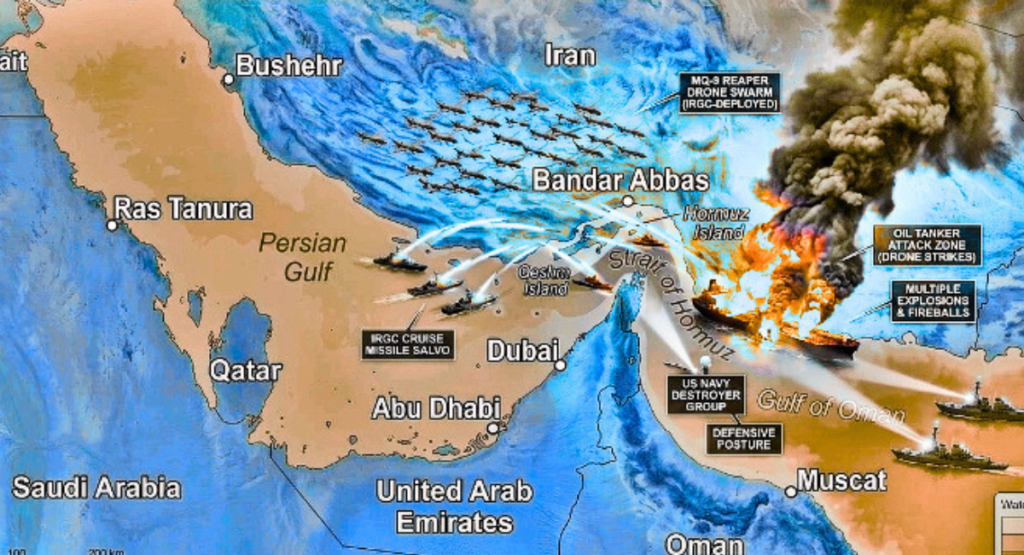
The Strait of Hormuz crisis matters because this narrow waterway connects major oil producers to global markets. Around 20 percent of the world’s oil supply moves through it daily, making it one of the most critical routes in the world.
Any disruption here does not stay local. It quickly affects fuel prices, trade routes, and even inflation worldwide.
2. Iran’s toll plan raises serious concerns
At the center of the Strait of Hormuz crisis is Iran’s reported plan to introduce a toll system for ships. This would mean vessels must seek approval and possibly pay fees to pass safely.
Critics argue this move could shift control of international waters into one country’s hands, which raises legal and strategic concerns.
3. US response and global pressure strategy
Donald Trump has pushed for a strong international response. The US is not just reacting alone but urging allies to share responsibility in securing the waterway.
Rubio made it clear that Washington wants collective action. The idea is simple: if multiple countries respond together, it sends a stronger message and reduces risk.
4. G7 nations and their cautious stance
The Group of Seven countries have acknowledged the seriousness of the crisis but are moving carefully. While they support free navigation, they have not fully committed to military involvement.
This hesitation shows a gap between political statements and real action, which could impact how the crisis unfolds.
5. Impact on global oil and energy markets
The Strait of Hormuz crisis has already started affecting oil movement. Tanker traffic has slowed, and uncertainty is rising in global markets.
Energy-dependent countries are watching closely because even small disruptions can lead to price spikes and economic pressure.
6. Military goals without ground troops
According to US officials, current operations aim to achieve strategic goals without deploying ground forces. This approach focuses on air power, naval presence, and targeted strikes.
It reflects an effort to avoid long-term military involvement while still maintaining pressure on Iran.
7. Rising tensions in the West Bank
Beyond the Strait of Hormuz crisis, Rubio also addressed increasing violence in the West Bank. Reports show attacks on civilians and property, raising human rights concerns.
This adds another layer to the regional instability, making diplomatic solutions even more complex.
8. International law and maritime concerns
Experts argue that controlling passage through the strait with tolls could violate international maritime law. Open access to such waterways has long been a global standard.
If this norm is challenged, it could set a precedent that affects other strategic routes worldwide.
9. Challenges in building global consensus
One of the biggest issues in the Strait of Hormuz crisis is the lack of unified global action. While many countries agree on the risks, they differ on how to respond.
Some prefer diplomacy, while others support stronger measures. This division slows decision-making at a critical time.
10. Possible future scenarios
The situation could move in several directions. It may de-escalate through negotiations, or tensions could rise if more countries get involved.
Much depends on how Iran proceeds with its plans and how strongly global powers react in the coming weeks.
11. Conclusion
The Strait of Hormuz crisis is more than a regional dispute. It is a global issue affecting energy, security, and international law.
How world powers respond now will shape not just this conflict but future global stability as well.
13. Frequently Asked Questions
1. What is the Strait of Hormuz crisis?
The Strait of Hormuz crisis refers to rising tensions after Iran’s plan to control or charge ships passing through this key oil route, creating global security and economic concerns.
2. Why is the Strait of Hormuz important?
The Strait of Hormuz is one of the world’s most important oil routes, with about 20 percent of global oil supply passing through it daily.
3. Why is Iran’s toll plan controversial?
Iran’s toll plan is controversial because it could restrict free movement in international waters and may violate maritime laws.
4. How is the US responding to the crisis?
The United States, led by Donald Trump, is urging allies to join efforts to secure the waterway and prevent Iran from controlling it.
5 . hat role did Marco Rubio play in this issue?
Marco Rubio highlighted the risks of Iran’s actions and called on global powers to take collective steps to protect free navigation.
6. Can the Strait of Hormuz crisis affect oil prices?
Yes, any disruption in the Strait of Hormuz can quickly increase oil prices and impact global markets.
7. Are other countries supporting the US stance?
Countries in the Group of Seven support free navigation but are cautious about direct involvement.
8. What could happen next in the Strait of Hormuz crisis?
The situation may either calm through diplomacy or escalate if tensions increase and more countries get involved.

I am the founder and writer at Duniya Time.com, a news website focused on national and international news, social issues, and history. With a background in Islamic History, I write research-based articles in a clear and honest style. My goal is to share accurate information, thoughtful analysis, and meaningful stories that help readers stay informed and understand the world better.