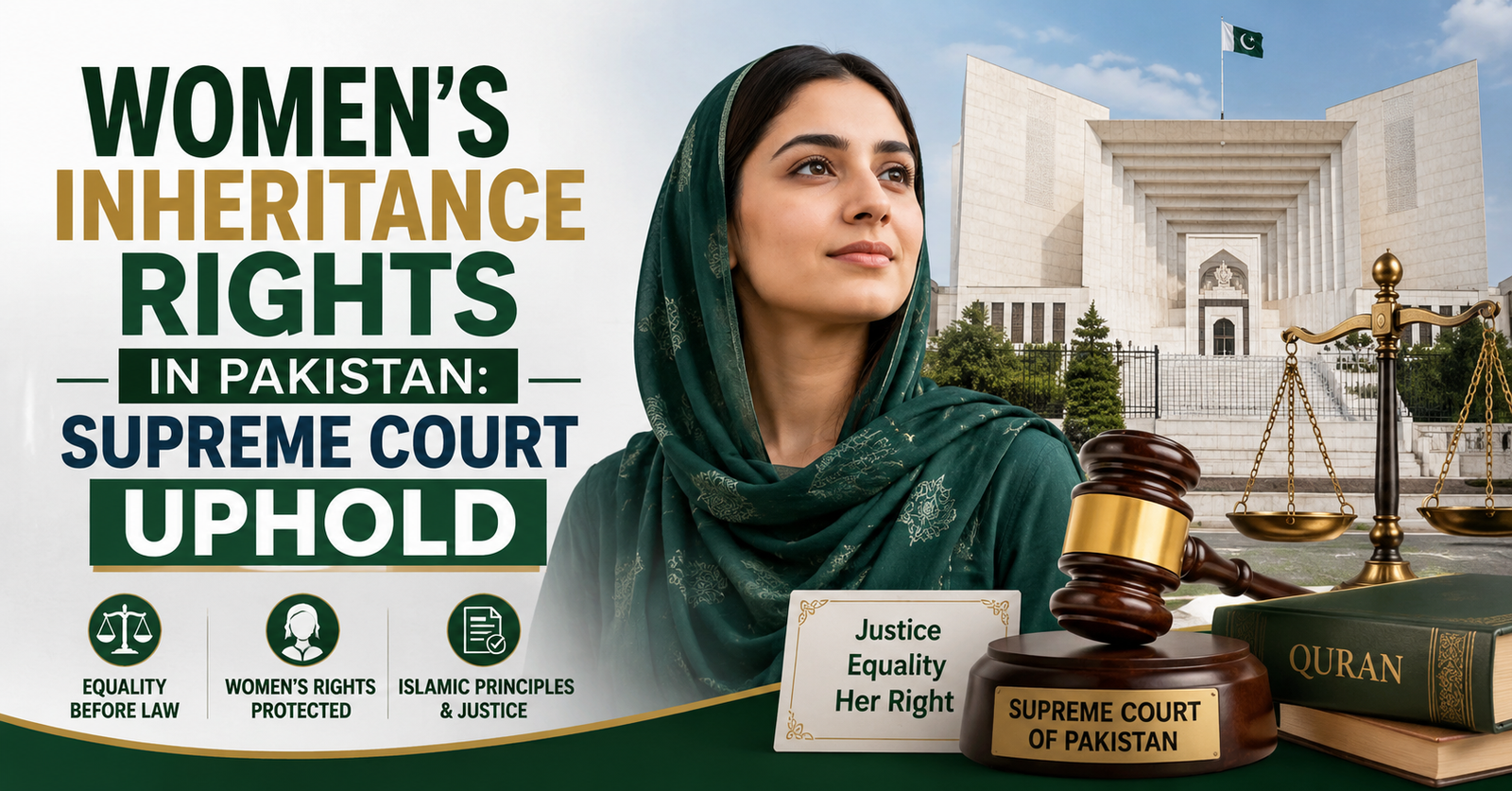
Women’s Inheritance Rights in Pakistan have returned to the national spotlight after the Supreme Court delivered a landmark ruling that reinforces women’s legal and Islamic right to inherit family property. The decision is expected to influence future inheritance disputes across the country while strengthening legal protections for female heirs.
Table of Contents
Women’s Inheritance Rights in Pakistan Get Stronger
The Supreme Court ruled that inheritance is a legal and Sharia based right that belongs to every eligible heir immediately after a person’s death. The court made it clear that no family tradition, private agreement, or social pressure can take away that right.
The judgment sends a strong message that women are equal legal heirs under Pakistan’s inheritance laws. Their share is protected by both Islamic principles and the Constitution.
A Family Dispute That Lasted More Than Seven Decades

The case involved a property dispute that began in 1955 after the death of a man named Roshan. His widow, daughters, and sons were recorded as legal heirs through an inheritance mutation.
However, another mutation entered on the same day claimed that the widow and daughters had verbally gifted their shares to the two sons. The female heirs later challenged that claim, arguing that no such gift had ever taken place.
Supreme Court Rejects the Disputed Mutation
After reviewing the evidence, the Supreme Court ruled that the disputed mutation was illegal and had no legal effect on the inheritance rights of the female heirs.
The court also restored the legal position of the women and confirmed that they were entitled to receive their lawful shares in the family property.
Revenue Authorities Ordered to Correct Records
The judgment directed the relevant revenue authorities to correct official land records and complete the legal division of property among all heirs.
The court stressed that accurate revenue records are essential to prevent fraud and future inheritance disputes.
Court Warns Against Depriving Female Heirs
The judges observed that women in Pakistan are often denied inheritance through fake gifts, manipulated land records, family pressure, or lengthy legal battles.
According to the ruling, courts and revenue officials must carefully examine every transaction that removes a woman from her rightful share of inherited property.
Islamic Law Protects Women’s Property Rights
The Supreme Court explained that inheritance has a special place in Islamic law because it ensures fair distribution of wealth among family members.
The judgment emphasized that inheritance is not a gift from male relatives. Instead, it is a right granted under Sharia that cannot be ignored or withdrawn through personal preferences or cultural practices.
Burden of Proof Lies With the Beneficiaries
The court also clarified an important legal principle regarding disputed gifts.
If someone claims that a female heir willingly transferred her inheritance, the responsibility to prove that claim lies with the people benefiting from the transaction. They must provide clear and lawful evidence.
Women’s Inheritance Rights in Pakistan Still Face Challenges
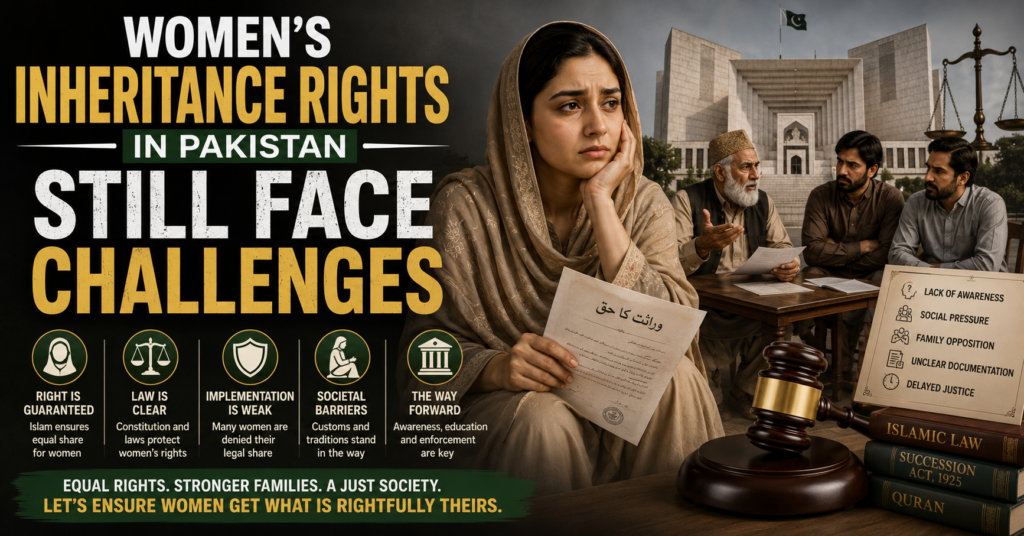
Despite existing laws, Women’s Inheritance Rights in Pakistan continue to face obstacles in many communities. Some women are pressured to give up their shares to preserve family relationships or avoid disputes.
Legal experts believe stronger enforcement, public awareness, and transparent land records are necessary to protect women from losing their lawful property.
Why This Judgment Matters
The ruling is expected to influence future inheritance cases across Pakistan. It reminds lower courts and revenue departments that protecting legal heirs is more important than accepting questionable property transfers.
The decision also encourages women to seek legal remedies if they believe they have been unfairly deprived of their inheritance.
Conclusion
Women’s Inheritance Rights in Pakistan received strong judicial support through this important Supreme Court judgment. By declaring inheritance a protected legal and Islamic right, the court reinforced that women cannot be deprived of their lawful share through fraud, pressure, or custom. The ruling is expected to strengthen legal protection and promote greater justice in future inheritance cases across Pakistan.
FAQS
- What did the Supreme Court rule about women’s inheritance rights?
The Supreme Court ruled that women have a legal and Sharia based right to inherit property and cannot be deprived through unlawful practices. - Why is this judgment important?
The decision strengthens the protection of female heirs and discourages fraudulent property transfers. - Can family customs override inheritance law?
No. The court made it clear that customs or family pressure cannot replace legal inheritance rights. - What happens if a disputed gift is challenged?
The people benefiting from the gift must prove that the transfer was legal and genuine. - How does Islamic law view women’s inheritance?
Islam grants women specific inheritance shares, making it a protected religious and legal right.

I am the founder and writer at Duniya Time.com, a news website focused on national and international news, social issues, and history. With a background in Islamic History, I write research-based articles in a clear and honest style. My goal is to share accurate information, thoughtful analysis, and meaningful stories that help readers stay informed and understand the world better.