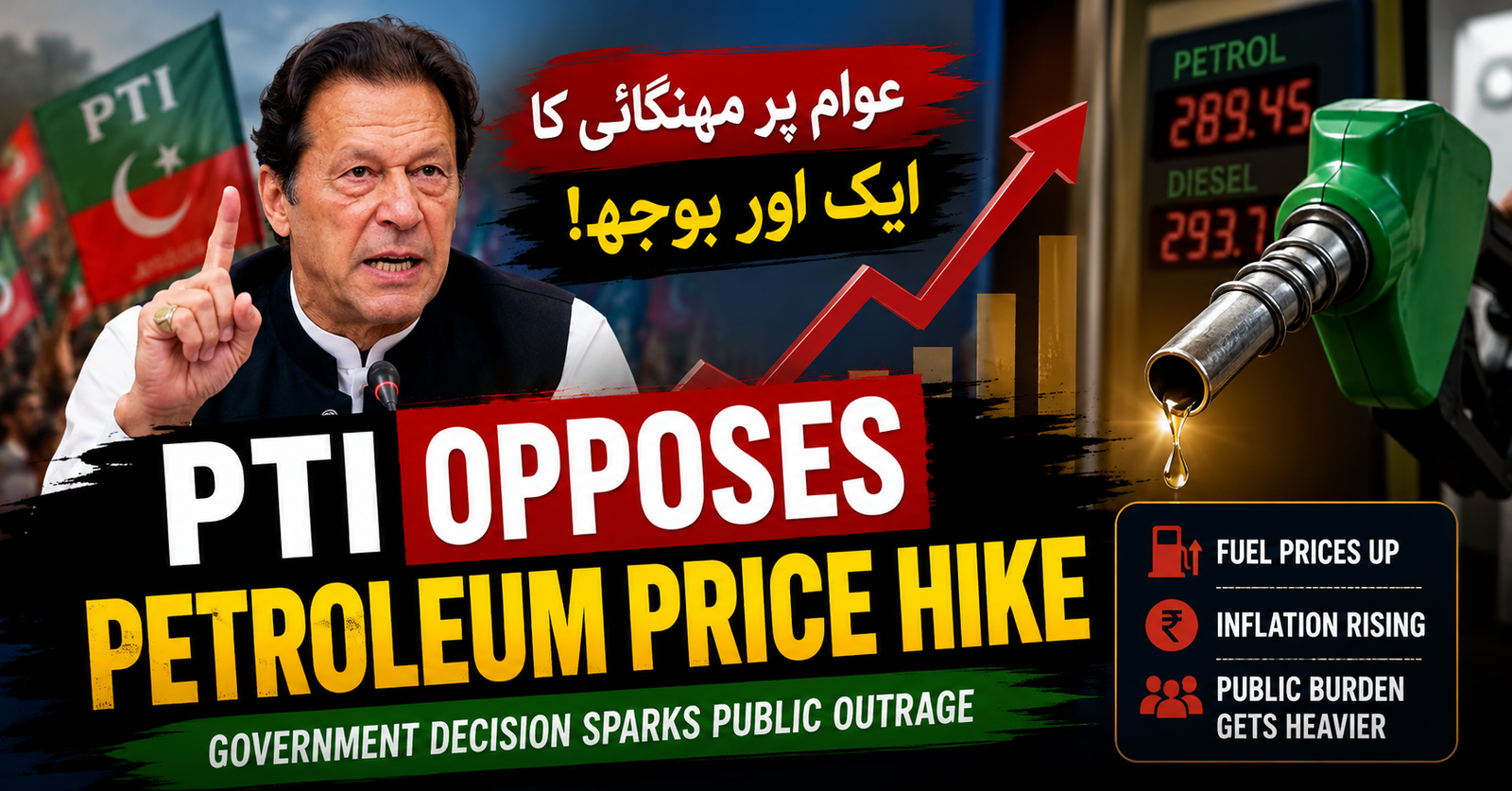
PTI opposes petroleum price hike and says the latest increase will place an even heavier financial burden on families and businesses across Pakistan. The party believes higher fuel prices will trigger fresh inflation and make daily life more difficult. The issue has become one of the most discussed political and economic topics as people search for answers about fuel prices, inflation, and government policies.
Table of Contents
Why Fuel Prices Have Increased
The government reviews petroleum prices regularly based on changes in international oil markets, exchange rates, and taxes. When global crude oil prices rise or the Pakistani rupee weakens, fuel becomes more expensive. Officials argue that price adjustments help manage financial commitments and reduce pressure on the national budget. However, many citizens remain concerned about the growing cost of living.
PTI Criticizes Government Policy
PTI opposes petroleum price hike and claims the decision will increase financial pressure on ordinary people. Party leaders argue that workers, farmers, transport operators, and small business owners are already struggling with rising expenses. They have urged the government to review its economic strategy and introduce measures that reduce the burden on households instead of increasing fuel costs.
Impact on Inflation in Pakistan
Petrol and diesel prices directly affect transportation and production costs. When fuel becomes more expensive, businesses often increase the prices of food, clothing, and other daily essentials. Economists say inflation can spread across many sectors after a fuel price increase. Consumers therefore worry that their monthly budgets will become even harder to manage.
Public Reaction Across the Country
Many citizens have expressed concern about the latest fuel price adjustment. Social media platforms are filled with discussions about household expenses, transport fares, and electricity costs. Public transport users fear higher fares, while business owners worry about increased operating costs. People continue searching for updates on petrol prices and possible government relief measures.
Economic Challenges Facing Pakistan
Pakistan continues to face economic challenges including inflation, currency fluctuations, and pressure on public finances. Experts believe the government must balance economic reforms with public welfare. They also stress the importance of encouraging investment, increasing exports, and improving energy management to create long term economic stability without placing excessive pressure on citizens.
Opposition Demands Relief Measures
PTI opposes petroleum price hike and has called on the government to provide immediate relief. The party has suggested reducing unnecessary spending, improving tax collection, and finding alternative ways to generate revenue. According to opposition leaders, protecting low and middle income families should remain a national priority during periods of economic uncertainty.
What Experts Say About Fuel Prices
Economic analysts explain that fuel pricing depends on several factors beyond government control, including global oil markets and exchange rate movements. At the same time, experts recommend transparent pricing policies and better communication with the public. They believe clear economic planning can improve confidence and help people understand why fuel prices change.
What Happens Next
The debate over fuel prices is likely to continue in parliament and public discussions. PTI opposes petroleum price hike while the government maintains that difficult economic decisions are necessary. Citizens will closely watch future fuel price reviews, inflation trends, and any relief packages that could reduce financial pressure on households and businesses.
Conclusion
PTI opposes petroleum price hike and the issue remains a major political and economic debate in Pakistan. Future government decisions, global oil prices, and economic conditions will determine whether fuel costs continue to rise or stabilize. For millions of Pakistanis, affordable fuel remains closely linked to daily expenses, business activity, and overall economic confidence.
FAQS
Why does PTI oppose petroleum price hike?
PTI opposes petroleum price hike because it believes higher fuel prices increase inflation, transport costs, and the financial burden on households.
How does a petroleum price hike affect daily life?
A rise in petrol and diesel prices increases transportation expenses, food prices, and the overall cost of living.
What causes petroleum prices to increase in Pakistan?
Petroleum prices are influenced by global crude oil prices, the rupee’s exchange rate, government taxes, and import costs.
Can the government reduce fuel prices?
Yes. If international oil prices fall or taxes are reduced, the government may lower petroleum prices during the next review.
What is PTI demanding regarding fuel prices?
PTI opposes petroleum price hike and has urged the government to introduce relief measures and review its fuel pricing policy.

I am the founder and writer at Duniya Time.com, a news website focused on national and international news, social issues, and history. With a background in Islamic History, I write research-based articles in a clear and honest style. My goal is to share accurate information, thoughtful analysis, and meaningful stories that help readers stay informed and understand the world better.