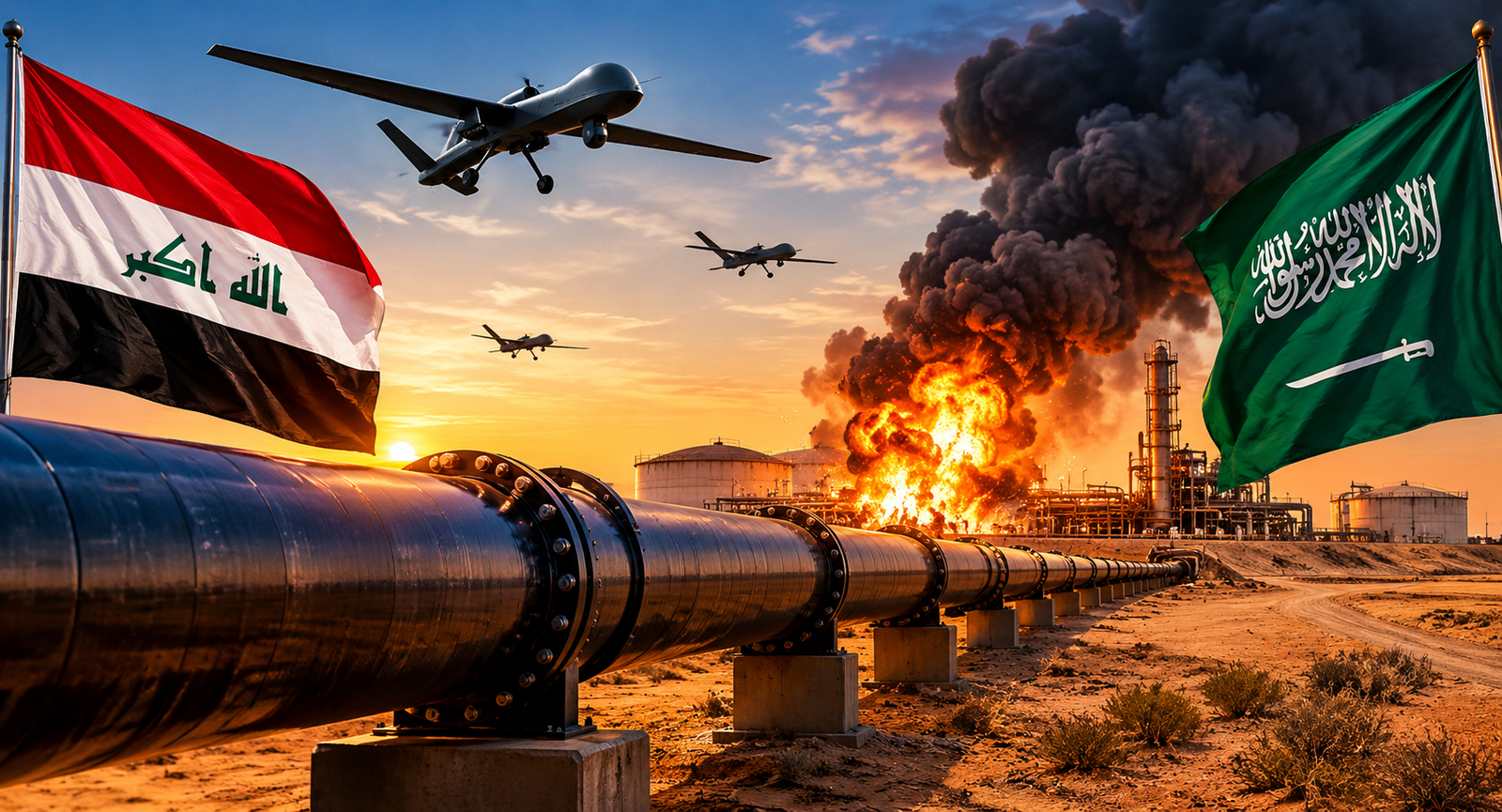
The Saudi oil pipeline was targeted by drones on the morning of Thursday, September 10, 2026. The Saudi government claimed that these drones came from Iraq. This pipeline was an alternative route for Saudi Arabia to the Strait of Hormuz. Around 4 to 5 million barrels of oil were being transported through this pipeline. The closure of the pipeline could lead to higher prices for petrol, diesel, and other energy products, as well as a possible inflation crisis.
Saudi Oil Pipeline Closure Expected Until September 12
Saudi Energy Minister Prince Abdulaziz bin Salman issued a statement on Twitter saying that the pipeline was shut down after Iraqi drone attacks on Riyadh and Medina. The pipeline was expected to remain closed until September 12.
On the other hand, the Saudi Foreign Minister decided not to take action at the request of Iraqi Prime Minister Ali al-Zaidi.
Saudi Foreign Minister: Iraqi Drone Attack Was an Attack on Sovereignty
Saudi Foreign Minister Faisal bin Farhan issued a statement saying that several people were injured as a result of the Iraqi drone attacks. The 1,200-kilometer-long pipeline was closed for the safety of civilians. He said that the Iraqi attack was an attack on Saudi Arabia’s sovereignty.
However, no one has claimed responsibility for the attack. The Saudi Foreign Minister decided not to take action at the request of Iraqi Prime Minister Ali al-Zaidi.
Iraqi Prime Minister Dismisses Commander After Pipeline Attack
Iraqi Prime Minister Ali al-Zaidi, who is also the Commander-in-Chief, dismissed the Operations Commander in Maysan province following the drone attack on the Saudi oil pipeline. According to the Iraqi minister, the Saudi oil pipeline was targeted from a location in Maysan province.
What Damage Could the Pipeline Closure Cause?
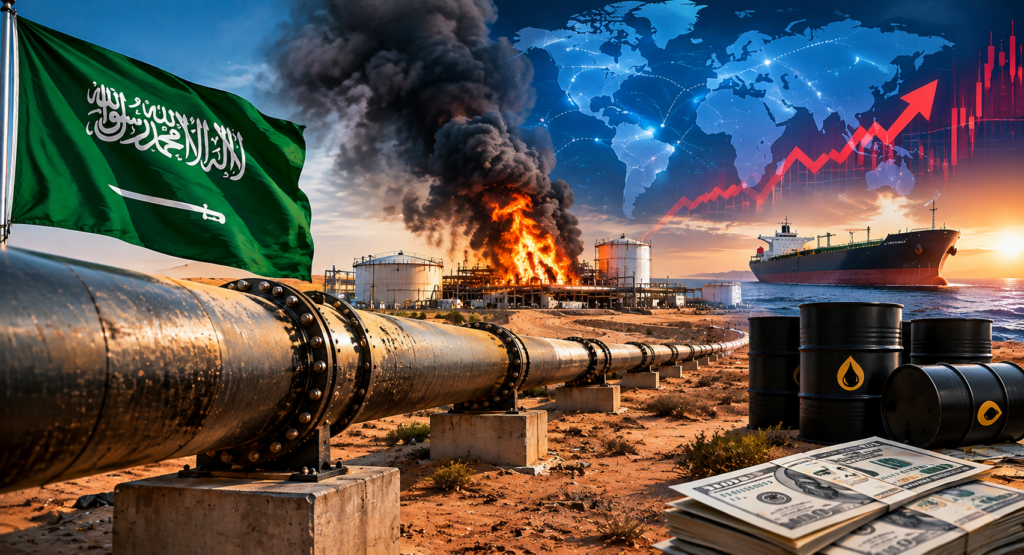
1. Saudi Oil Exports Could Be Affected
The East-West Pipeline transports oil from eastern Saudi Arabia to Yanbu on the western coast. In recent months, around 4 to 5 million barrels of oil per day were being transported through the pipeline. The closure could affect this supply.
2. Saudi Arabia Could Lose an Alternative Route
The pipeline is particularly important because it helps transport oil to the Red Sea without passing through the Strait of Hormuz. If the pipeline remains closed, Saudi Arabia’s alternative routes for exporting oil could become limited.
3. Global Oil Prices Could Rise
If a large amount of Saudi oil cannot reach the global market, concerns about supply could increase. This could push crude oil prices higher. Amid the current tensions, oil prices have already risen above $100 per barrel.
4. Asian and Other Buyers Could Be Affected
Saudi Arabia is one of the world’s major oil exporters. If exports remain affected for a long period, major buyers, including those in Asia, may have to look for alternative supplies, which could put further pressure on prices.
Conclusion
The situation is particularly important because oil transportation through the Strait of Hormuz is already affected, while security risks also remain in the Red Sea and Bab el-Mandeb. This means that pressure is increasing on both of Saudi Arabia’s major alternative routes.
FAQS
- Why was the Saudi oil pipeline shut?
The Saudi oil pipeline was temporarily shut after Iraqi drone attacks. - When was the Saudi oil pipeline targeted?
The Saudi oil pipeline was targeted on the morning of September 10, 2026. - How much oil does the pipeline transport?
The pipeline transports around 4 to 5 million barrels of oil per day. - Why is the Saudi oil pipeline important?
The Saudi oil pipeline provides an alternative route for transporting oil without passing through the Strait of Hormuz. - Could the pipeline closure increase oil prices?
Yes, a prolonged closure could raise concerns about global oil supplies and put pressure on crude oil prices.

I am the founder and writer at Duniya Time.com, a news website focused on national and international news, social issues, and history. With a background in Islamic History, I write research-based articles in a clear and honest style. My goal is to share accurate information, thoughtful analysis, and meaningful stories that help readers stay informed and understand the world better.