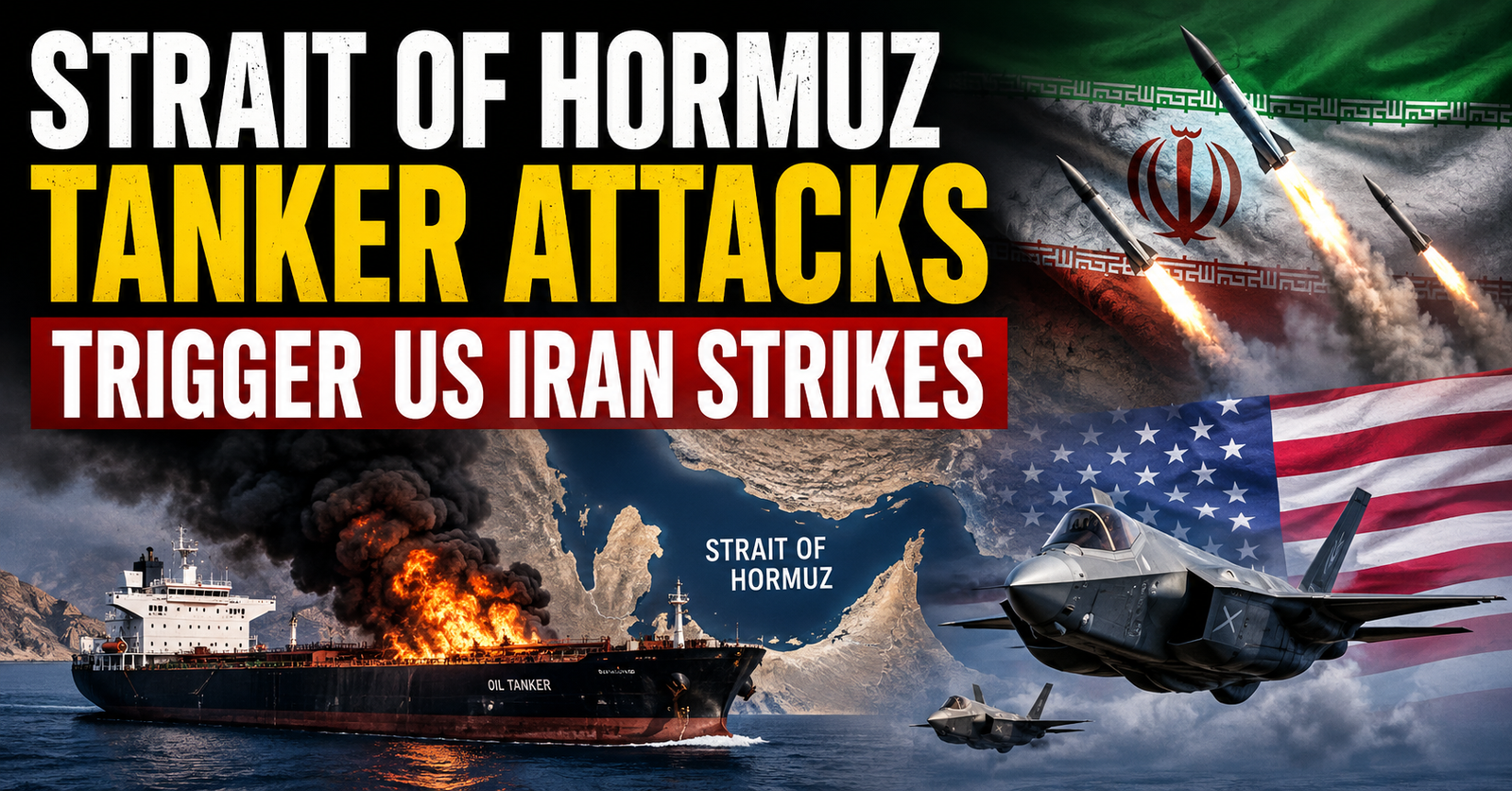
Strait of Hormuz Tanker Attacks have pushed the Middle East into another dangerous phase after commercial ships were hit, prompting US military strikes and Iranian retaliation. The escalating crisis is raising fresh concerns over global oil supplies, maritime security, and regional stability.
Table of Contents
Strait of Hormuz Tanker Attacks
The Strait of Hormuz tanker attacks marked a major escalation in regional tensions after three commercial vessels were struck while passing through one of the world’s busiest oil routes. The incidents disrupted maritime security, raised concerns about the safety of international shipping, and increased fears of wider military confrontation. Governments and shipping companies immediately began reassessing security measures as global markets closely monitored the rapidly developing situation.
US Responds to Tanker Attacks
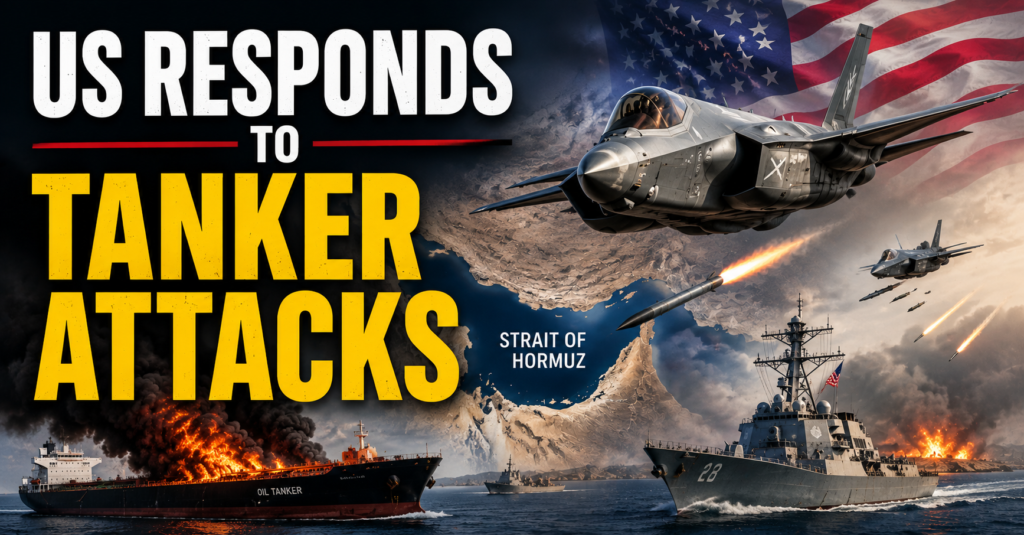
The United States responded with coordinated military strikes against multiple targets linked to Iran after blaming Tehran for attacks on commercial tankers. Washington said the operation was intended to protect international shipping routes, deter further aggression, and reinforce security in the strategically important Strait of Hormuz.
Iran Denies Tanker Attack Claims
Strait of Hormuz Tanker Attacks became the center of a diplomatic dispute as Iran rejected accusations that it was responsible for targeting commercial vessels. Tehran called the claims unfounded and argued that recent US military actions and renewed sanctions had intensified regional tensions instead of supporting stability and dialogue.
Iran US Retaliatory Strikes Begin
The conflict quickly expanded as both sides exchanged military actions across the region. Following US strikes on Iranian targets, Tehran announced retaliatory attacks against American military facilities in Bahrain and Kuwait. The escalation increased fears of a broader regional conflict, while governments closely monitored the security of key shipping lanes and military bases.
Strait of Hormuz Oil Market Impact
Strait of Hormuz Oil Market Impact became a major concern as renewed military tensions disrupted confidence in one of the world’s busiest energy routes. Traders closely watched the situation, fearing delays in crude oil shipments and higher transport costs. The uncertainty increased market volatility and raised concerns about possible fuel price fluctuations in global energy markets.
US Restores Iran Oil Sanctions
The Strait of Hormuz Tanker Attacks prompted Washington to restore sanctions on Iranian oil exports, arguing that Tehran had failed to meet its commitments. The decision increased economic pressure on Iran and added fresh uncertainty to energy markets as diplomatic tensions and security concerns continued to grow.
Shipping Risks in Strait of Hormuz
Shipping through the Strait of Hormuz has become increasingly risky as military tensions and repeated attacks on commercial vessels continue to threaten safe navigation. Shipping companies are reviewing routes, increasing security measures, and preparing for possible delays. Since a large share of the world’s oil and liquefied natural gas passes through this narrow waterway, any disruption can affect global trade, energy supplies, and transportation costs.
Strait of Hormuz Ceasefire Tested
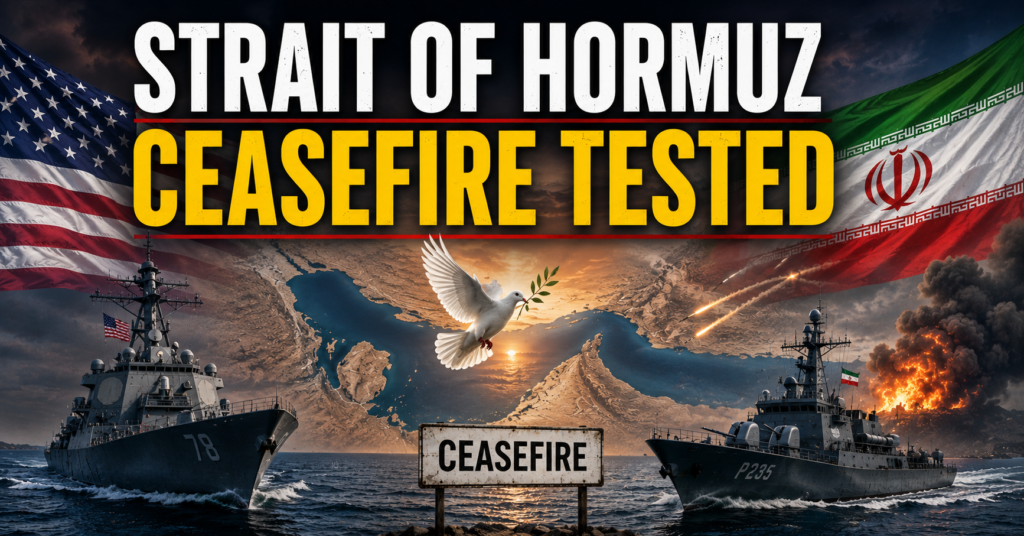
The Strait of Hormuz Tanker Attacks placed the ceasefire under severe pressure by triggering new military and diplomatic tensions. Fresh accusations, retaliatory actions, and renewed sanctions weakened confidence in the agreement, making future negotiations more difficult and increasing uncertainty across the Gulf region.
Strait of Hormuz Crisis Explained
The Strait of Hormuz crisis reflects the growing rivalry between the United States and Iran over security, navigation, and regional influence. Recent tanker attacks, military strikes, and renewed sanctions have increased instability around one of the world’s most important energy corridors. As diplomatic efforts face new challenges, the situation remains critical for global trade, oil supplies, and the broader Middle East security landscape.
Conclusion
The Strait of Hormuz remains a critical global shipping route where rising tensions can quickly affect energy markets and regional security. Continued diplomacy and restraint will be essential to prevent further escalation and protect international trade
FAQs
What are Strait of Hormuz Tanker Attacks?
The Strait of Hormuz Tanker Attacks refer to recent strikes on commercial vessels passing through the strategic waterway, increasing regional tensions and security concerns.
Why are the Strait of Hormuz Tanker Attacks important?
The Strait of Hormuz Tanker Attacks threaten one of the world’s busiest energy routes, which can affect global oil supplies, shipping, and fuel prices.
How did the US respond to the Strait of Hormuz Tanker Attacks?
The US launched military strikes on selected Iranian targets and restored sanctions on Iranian oil exports after blaming Iran for the attacks.
How can the Strait of Hormuz Tanker Attacks affect global markets?
The Strait of Hormuz Tanker Attacks may increase oil prices, disrupt shipping schedules, and create uncertainty in international energy markets.
What could happen next after the Strait of Hormuz Tanker Attacks?
Future developments will depend on diplomatic efforts, military actions, and whether both sides avoid further escalation in the Gulf region.

I am the founder and writer at Duniya Time.com, a news website focused on national and international news, social issues, and history. With a background in Islamic History, I write research-based articles in a clear and honest style. My goal is to share accurate information, thoughtful analysis, and meaningful stories that help readers stay informed and understand the world better.