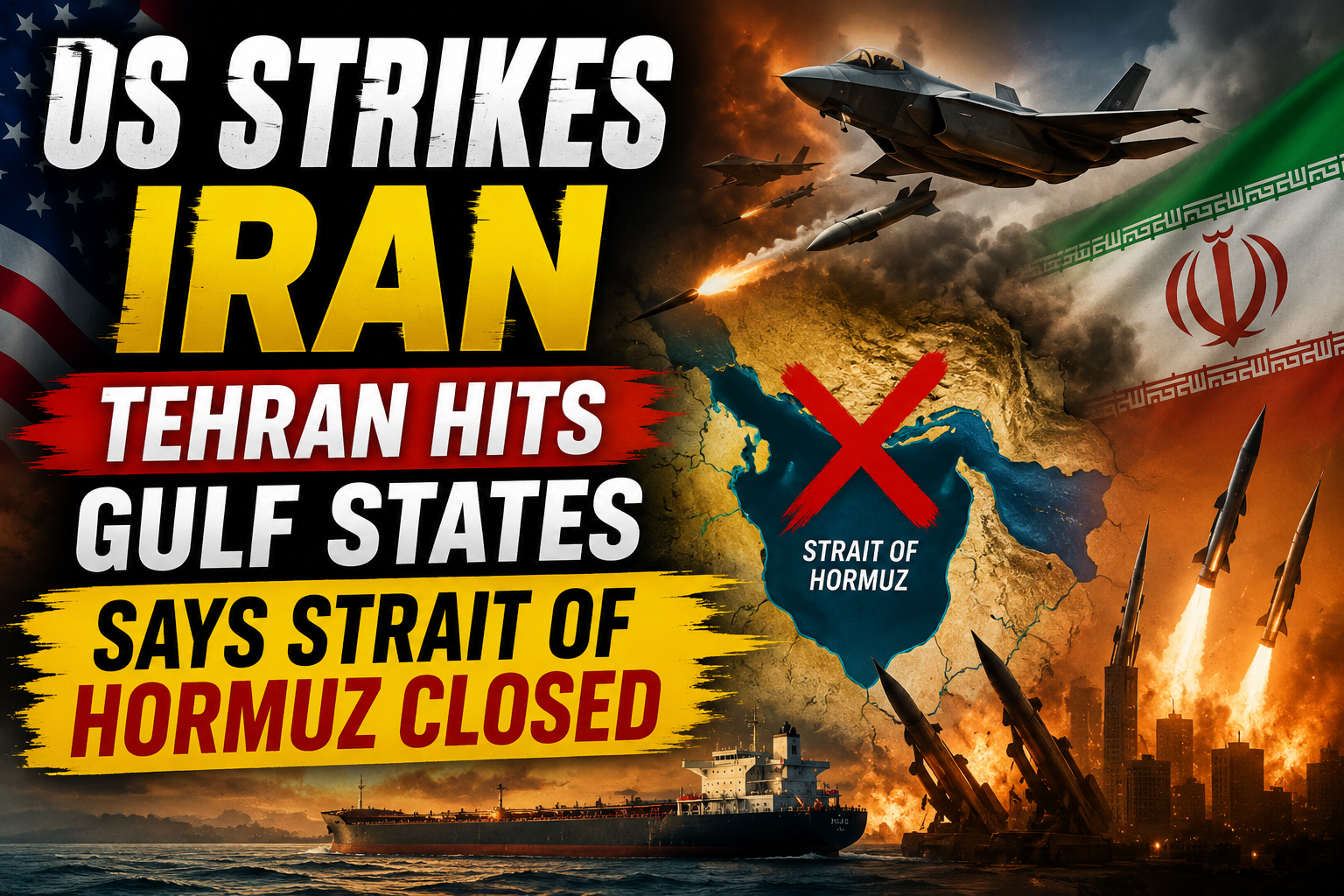
US strikes Iran, Tehran hits Gulf states, says Strait of Hormuz closed has become one of the biggest international developments in recent years. The military escalation has increased fears of a wider regional conflict, disrupted energy markets, and raised concerns about global economic stability. Governments across the world are closely monitoring every new development.
Table of Contents
US Launches Major Airstrikes on Iran
The United States carried out large scale military strikes on several Iranian military facilities after rising tensions between the two countries. According to official statements, the attacks targeted missile launch sites, military bases, and strategic infrastructure linked to Iran’s armed forces. Washington said the operation aimed to reduce future security threats and protect American interests in the Middle East.
Military analysts believe the strikes marked a major shift in the ongoing confrontation. The attacks increased concerns that the conflict could expand beyond Iran and involve several regional countries. International observers warned that continued military action could make diplomatic efforts more difficult and increase instability across the Gulf region.
Iran Responds With Attacks on Gulf States
Following the American operation, Iran launched missile and drone attacks targeting military facilities in several Gulf states. Iranian officials claimed the attacks were a direct response to US military action and warned that countries supporting Washington could also face consequences if the conflict continued.
Several Gulf countries activated air defense systems to intercept incoming missiles and drones. Emergency authorities increased security around airports, military bases, and energy infrastructure. Regional governments also advised citizens to remain alert while monitoring the changing security situation.
Strait of Hormuz Closure Raises Alarm
Iran announced that the Strait of Hormuz closed after the military escalation. The narrow waterway is one of the world’s most important shipping routes because a significant share of global oil exports passes through it every day. Any disruption immediately affects international energy markets.
Shipping companies started reviewing their routes while insurance costs for vessels operating in the Gulf increased sharply. Energy experts warned that prolonged disruption could reduce global oil supplies, increase transportation costs, and create uncertainty for businesses that depend on stable fuel prices.
Oil Prices React to Regional Crisis
Global oil markets reacted quickly after reports that US strikes Iran, Tehran hits Gulf states, says Strait of Hormuz closed. Crude oil prices moved higher as investors worried about supply disruptions from the Gulf region. Energy traders closely monitored military developments and official government statements.
Higher oil prices could increase fuel costs for consumers and businesses worldwide. Countries that import large amounts of oil may experience higher inflation and increased transportation expenses. Economists said market conditions will largely depend on how long the security situation remains unstable.
Gulf States Strengthen Security Measures
Governments across the Gulf region increased military readiness following Iran’s attacks. Air defense systems were placed on high alert while security forces protected major ports, airports, power plants, and oil facilities. Emergency response teams were also prepared for any additional security incidents.
Regional leaders held urgent meetings with defense officials to review security strategies and coordinate with international partners. Several countries called for restraint while emphasizing the importance of protecting civilian infrastructure and maintaining regional stability during the crisis.
Global Leaders Call for Diplomacy
The international community urged both sides to avoid further military escalation. Many governments stressed that dialogue remains the best path toward reducing tensions and preventing a larger regional conflict. Diplomatic channels continued to remain active despite the ongoing military exchanges.
The United Nations and several international organizations appealed for restraint and respect for international law. Officials warned that expanding the conflict could threaten global peace, increase humanitarian challenges, and negatively affect international trade and economic growth.
Impact on Global Trade and Shipping

The Gulf region plays a critical role in international trade because thousands of commercial vessels pass through its waters every year. Any disruption around the Strait of Hormuz affects shipping schedules, delivery times, and transportation costs for businesses around the world.
Shipping companies may choose alternative routes if security conditions worsen, although these routes often require additional travel time and higher operating costs. Experts said prolonged uncertainty could affect global supply chains and increase prices for many imported products.
Economic Risks for the World
Financial markets reacted cautiously as investors evaluated the risks created by the latest military developments. Stock markets experienced volatility while investors shifted toward safer assets. Currency markets also reflected growing uncertainty surrounding the regional security situation.
Economists warned that a prolonged conflict could slow global economic growth by increasing energy prices, reducing business confidence, and disrupting international trade. Developing countries that rely heavily on imported fuel may face additional economic pressure if oil prices remain elevated.
What Could Happen Next
The future of the crisis depends on military decisions and diplomatic negotiations in the coming days. Additional attacks could increase regional instability, while successful diplomatic efforts may help reduce tensions and reopen important shipping routes in the Gulf.
Analysts believe governments will continue balancing military preparedness with diplomatic engagement. The coming weeks will be important for determining whether the situation moves toward further escalation or a negotiated effort to restore regional stability and protect international trade.
Conclusion
US strikes Iran, Tehran hits Gulf states, says Strait of Hormuz closed has created serious security and economic concerns worldwide. The next phase will depend on diplomacy, military decisions, and international efforts to prevent a broader regional conflict.
FAQS
US Strikes Iran, Tehran Hits Gulf States, Says Strait of Hormuz ClosedWhat does US strikes Iran, Tehran hits Gulf states, says Strait of Hormuz closed mean?
The phrase refers to a major military escalation in which the United States launched strikes on Iran, Iran responded by targeting Gulf states, and Tehran announced the closure of the Strait of Hormuz, a vital global shipping route.
Why is the Strait of Hormuz important?
The Strait of Hormuz is one of the world’s busiest oil shipping routes. A large share of global crude oil exports passes through it every day. Any disruption can affect energy supplies, fuel prices, and international trade.
How could US strikes Iran, Tehran hits Gulf states, says Strait of Hormuz closed affect oil prices?
The conflict can increase uncertainty in global energy markets. If shipping through the Strait of Hormuz is disrupted, oil supplies may tighten, leading to higher crude oil and fuel prices worldwide.
Which countries could be affected by the crisis?
Countries in the Gulf region may face higher security risks, while oil importing nations around the world could experience rising fuel costs, inflation, and disruptions to international trade if tensions continue.
What could happen next after US strikes Iran, Tehran hits Gulf states, says Strait of Hormuz closed?
The next developments will depend on military actions and diplomatic efforts. International leaders are urging restraint to prevent a wider regional conflict and restore stability in the Middle East.

I am the founder and writer at Duniya Time.com, a news website focused on national and international news, social issues, and history. With a background in Islamic History, I write research-based articles in a clear and honest style. My goal is to share accurate information, thoughtful analysis, and meaningful stories that help readers stay informed and understand the world better.