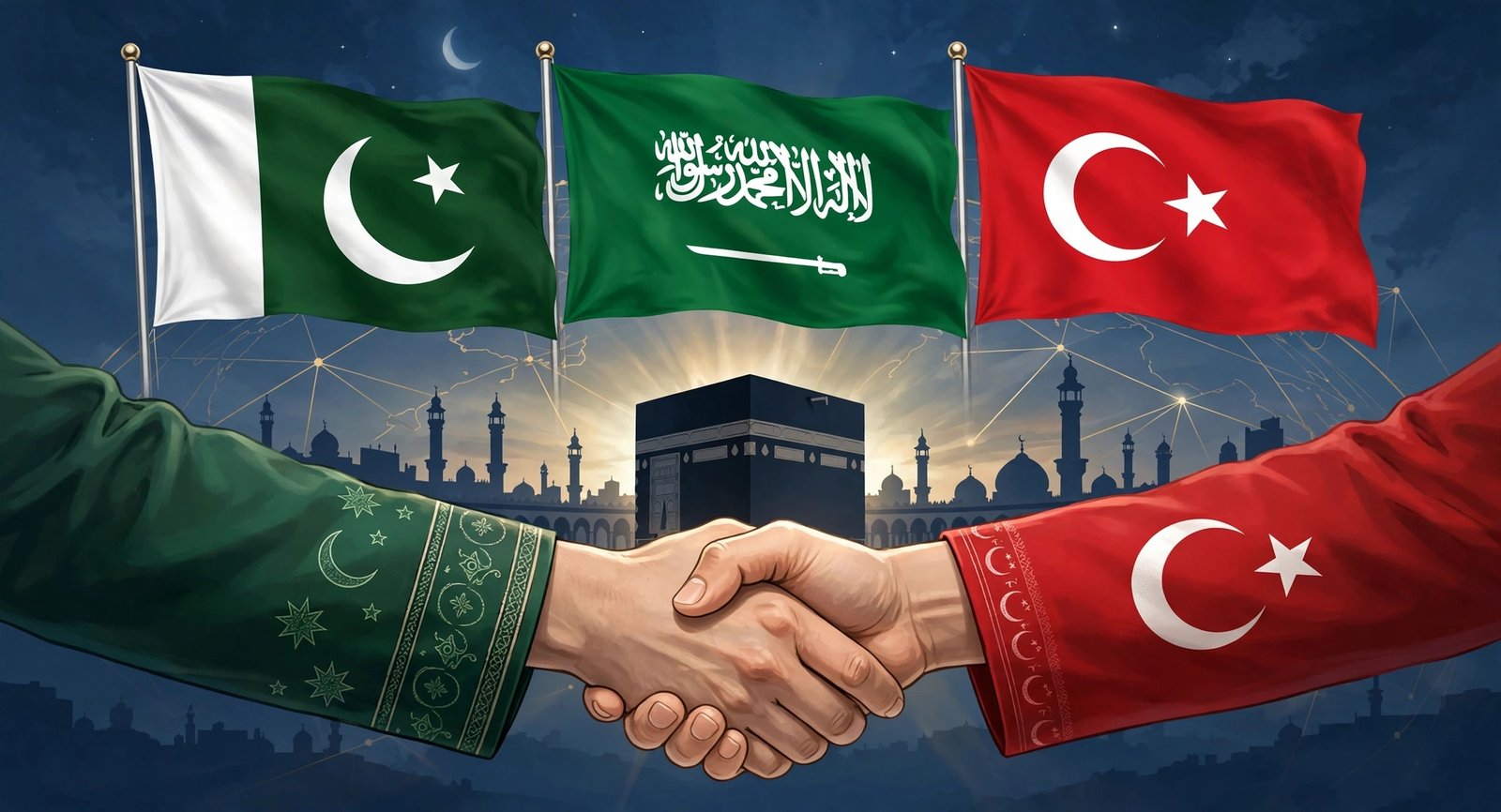
Makkha Defense Latest update
Makkah Joint Defence Agreement
Pakistan, Saudi Arabia, and Türkiye signed the Makkah Joint Defence Agreement on August 7, 2026. The agreement aims to strengthen defence cooperation among the three countries. Under the agreement, an armed attack against any one of the three countries would be treated as an attack against all three, requiring them to work together in response.
The first meeting of the committee established under the Makkah Joint Defence Agreement was held in Istanbul, Türkiye, on August 31, 2026.
Headquarters and Secretary General Appointment
To put the agreement into operation, the three countries agreed to establish a secretariat in Saudi Arabia. Turkish Foreign Minister Hakan Fidan said that the first Secretary General would be from Pakistan and would serve for an initial three-year term.
Makkah Defence Agreement and NATO Article 5
Speaking to the media, Turkish Foreign Minister Hakan Fidan compared the mutual defence principle of the Makkah agreement with NATO’s Article 5. Under the Makkah agreement, an armed attack against one of the three countries is to be treated as an attack against all three, with the countries committed to working together in response.
A joint defence agreement has been reached between Pakistan, Saudi Arabia, and Türkiye. The purpose of this agreement is to strengthen the collective defence capabilities of the three countries.
If one country is attacked, the three allied countries will jointly decide on the course of action.
Table of Contents
When, Where, and Why Was the Joint Defence Agreement Made?
The joint defence agreement was made on August 14, 2026, in the Saudi city of Makkah, with the participation of the leaders of Pakistan, Türkiye, and Saudi Arabia. The purpose of this agreement is not to take action against any particular country, but solely to send a message of peace.
The first meeting under the joint defence agreement was held in Istanbul on August 31, 2026, with the participation of senior officials from the three countries.
Joint Defence Agreement: A Modern Example of the Charter of Medina
The joint defence agreement is a modern example of the Charter of Medina. When Prophet Muhammad (PBUH) migrated from Makkah to Medina, he established an agreement among the Ansar of Medina, the Muhajireen, and the Jewish tribes. The purpose of this agreement was to establish peace and security and promote peace in the region.
Today, Pakistan, Saudi Arabia, and Türkiye have renewed the example of the Charter of Medina.
Defensive Nature of the Joint Agreement
DG ISPR Lieutenant General Ahmed Sharif Chaudhry, while speaking to the media, said that the agreement between the three countries, Saudi Arabia, Türkiye, and Pakistan, is based on collective defence. The purpose of the agreement is not to take action against any particular country, establish control over another country’s borders, or occupy any particular region.
This agreement itself sends a message of peace. No country or individual should have any objection to this agreement.
Key Points of the Defence Agreement
- Pakistan, Saudi Arabia, and Türkiye are parties to the agreement.
- The purpose of the agreement is the collective defence of the three countries.
- An armed attack on one member country will be considered an attack on all three.
- In the event of an attack, the three countries will make a decision through mutual consultation.
- The purpose of the agreement is not to occupy the territory of any country.
- The agreement is not an offensive alliance against any specific country.
- Its purpose is to prevent attacks through collective defence capabilities.
- The three countries will further strengthen their defence and military cooperation.
- The agreement does not end the three countries’ relations with other countries.
- In the event of an attack, the nature of any response will be decided jointly by the three countries.
The Defence Agreement Will Not Affect Relations with China and Iran
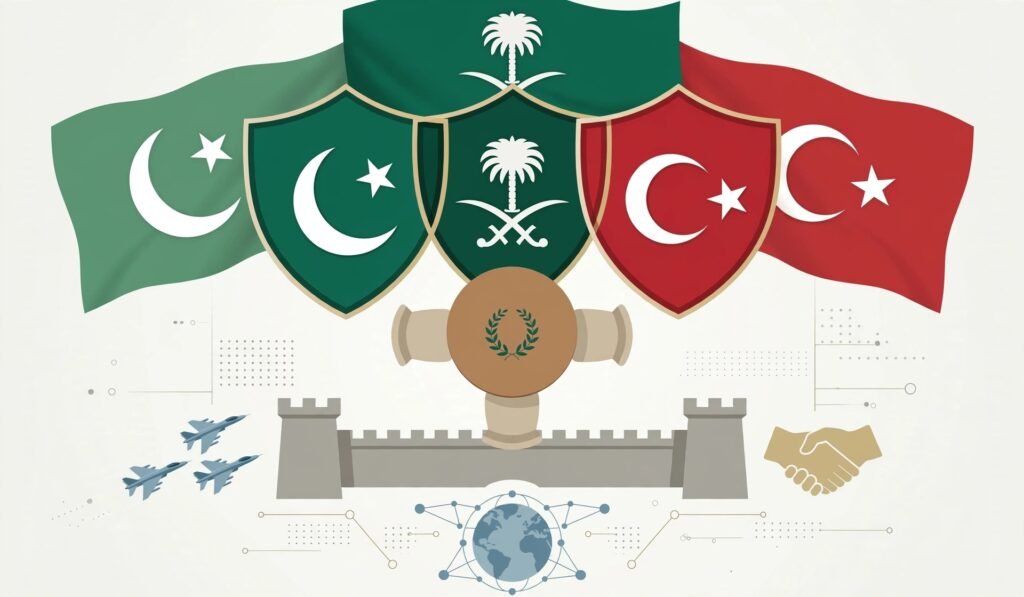
DG ISPR further explained the nature of the Makkah Defence Agreement in an interview with Al Arabiya, saying that the defence agreement will not affect relations with China and Iran.
Pakistan, Saudi Arabia, and Türkiye have their own defence and diplomatic relations with China and Iran. These relationships will retain their existing status and will not be affected by this agreement.
Yemeni Houthis and the Makkah Defence Agreement
Yemeni Houthis have been carrying out drone and missile attacks on Saudi Arabia from time to time. In this situation, the three countries should have jointly decided on action against them, but so far, the three countries have remained silent and no action has been taken.
Following the Houthi attacks,important pipeline and the Saudi Mishayt Air Base suffered severe damage.
Conclusion
The Makkah Defence Agreement was made to strengthen collective defence and security cooperation between Pakistan, Saudi Arabia, and Türkiye. Its purpose is not to launch an offensive action against any country or occupy any territory.
FAQS
- What is the Makkah Defence Agreement?
The Makkah Defence Agreement is a joint defence agreement between Pakistan, Saudi Arabia and Türkiye focused on collective defence and security cooperation. - Who signed the Makkah Defence Agreement?
Pakistan, Saudi Arabia and Türkiye are the three countries participating in the Makkah Defence Agreement. - What happens if one country is attacked?
If one member country faces an armed attack, the three countries will consult each other and decide on an appropriate response. - Is the Makkah Defence Agreement against a specific country?
The agreement has been described as defensive in nature and is not presented as an alliance targeting a specific country. - Will the agreement affect Pakistan’s relations with Iran and China?
According to the stated position, the agreement does not automatically change Pakistan’s existing relations with Iran or China.

I am the founder and writer at Duniya Time.com, a news website focused on national and international news, social issues, and history. With a background in Islamic History, I write research-based articles in a clear and honest style. My goal is to share accurate information, thoughtful analysis, and meaningful stories that help readers stay informed and understand the world better.