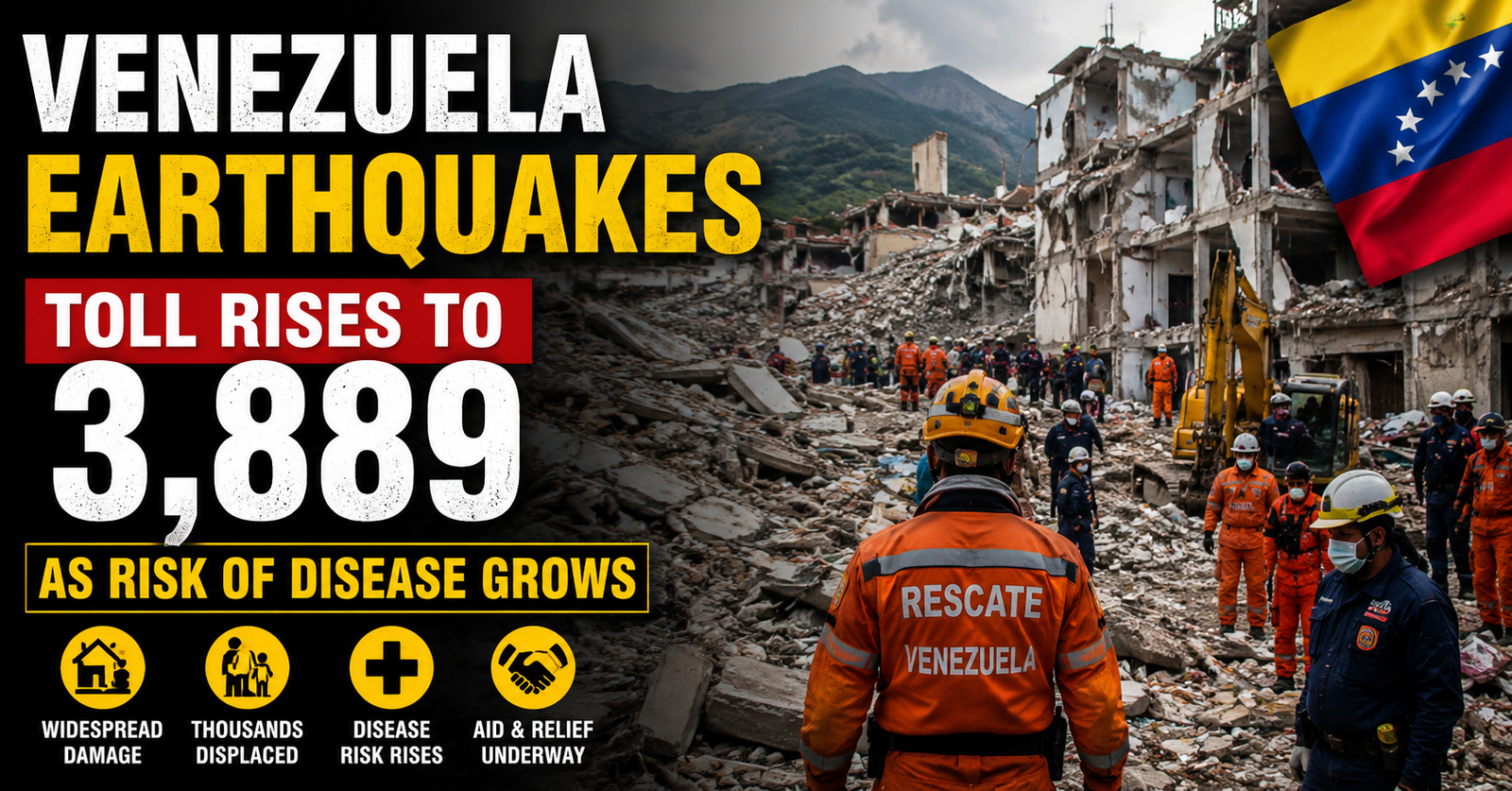
Venezuela earthquakes have left thousands of families struggling as the confirmed death toll climbs to 3,889. Rescue teams continue searching damaged areas while health officials warn that overcrowded shelters, unsafe drinking water, and poor sanitation could trigger disease outbreaks if emergency conditions continue.
Table of Contents
Rescue Operations Continue
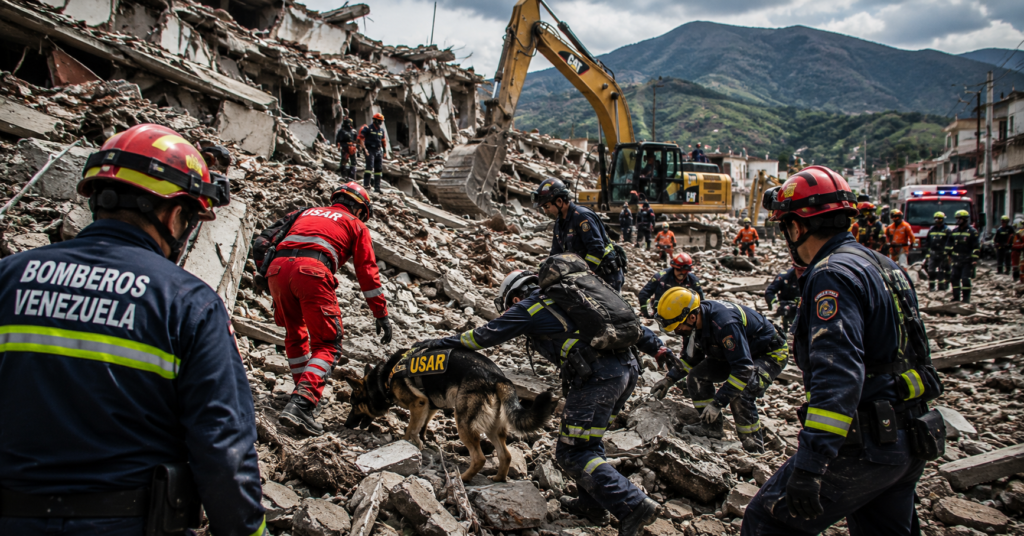
Emergency workers are racing against time to search collapsed buildings and isolated communities. Heavy machinery, rescue dogs, and volunteers are working together despite damaged roads and disrupted communications. Authorities say every hour is critical for finding survivors trapped under debris.
Thousands Left Without Homes
The disaster has forced many families into temporary shelters after homes, schools, and public buildings suffered severe structural damage. Communities are facing shortages of food, clean water, blankets, and essential supplies. Relief organizations are expanding support, but demand continues to grow as more displaced people arrive.
Health Crisis Raises New Concerns
Medical experts warn that Venezuela earthquakes have created conditions that increase the risk of infectious diseases. Limited access to safe water, overcrowded shelters, and damaged sanitation systems can allow illnesses such as diarrhea, respiratory infections, and mosquito borne diseases to spread quickly unless preventive measures are strengthened.
Hospitals Under Heavy Pressure
Healthcare facilities are treating large numbers of injured people while also dealing with shortages of medical equipment and medicines. Some hospitals have transferred patients to safer locations after buildings were damaged. Doctors and nurses continue working long hours to provide emergency treatment despite limited resources.
Aid Reaches Affected Communities
Governments, humanitarian agencies, and local charities have started delivering emergency food, clean water, medicines, and temporary shelter materials. Venezuela earthquakes have also prompted international support, with relief teams helping local authorities restore essential services and improve access to remote communities.
Damage to Roads and Infrastructure
Major roads, bridges, electricity networks, and communication systems have suffered extensive damage. Repair crews are working to reopen transport routes so emergency supplies can reach affected regions faster. Restoring infrastructure is expected to take months because of the scale of destruction.
Families Face an Uncertain Future
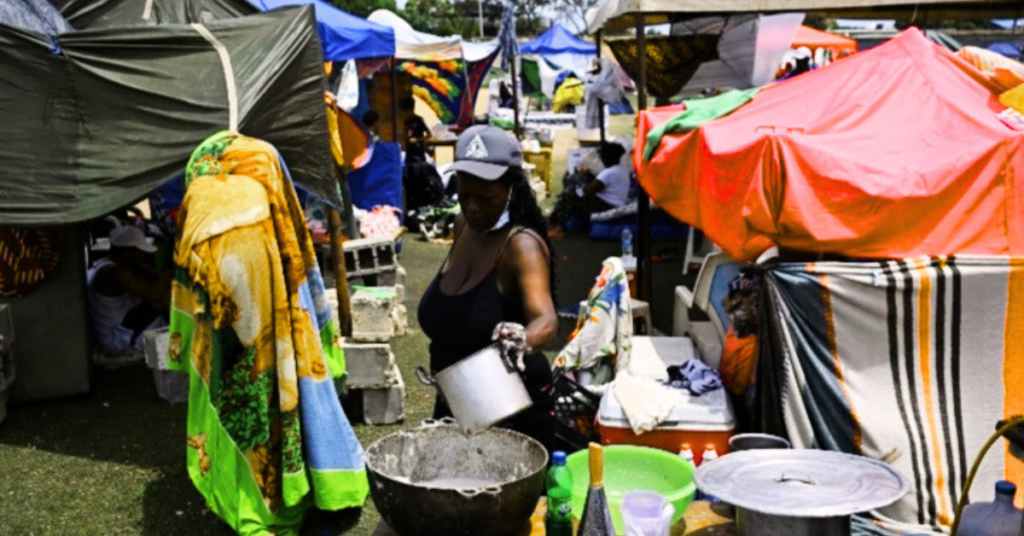
Many survivors have lost loved ones, homes, and livelihoods. Children remain out of school while parents focus on securing food and shelter. Mental health specialists say emotional support will be essential as communities begin recovering from the trauma caused by the Venezuela earthquakes.
Recovery Will Take Time
Rebuilding damaged neighborhoods requires careful planning, financial support, and stronger construction standards. Experts believe safer building practices and improved disaster preparedness can reduce future losses. Authorities are also reviewing emergency response systems to improve coordination during future natural disasters.
Global Support Remains Important
International cooperation continues to play a key role in delivering humanitarian assistance. Relief organizations are encouraging donations, medical supplies, and technical support to strengthen recovery efforts. Continued monitoring of public health conditions will help reduce the possibility of large disease outbreaks following the Venezuela earthquakes.
Conclusion
Venezuela earthquakes have caused devastating human and economic losses, while growing disease risks add another challenge. Fast humanitarian aid, better healthcare, and long term rebuilding efforts will be essential to help affected communities recover safely and rebuild their lives.
FAQs
What caused the Venezuela earthquakes?
The Venezuela earthquakes were triggered by movement along active tectonic fault lines. Seismologists continue to study the exact cause and aftershock activity.
How many people were affected by the Venezuela earthquakes?
Thousands of people have been affected by the Venezuela earthquakes, with widespread damage to homes, roads, hospitals, and public infrastructure.
Why is there a growing disease risk after the Venezuela earthquakes?
The disease risk has increased because many survivors are living in overcrowded shelters with limited access to clean water, sanitation, and healthcare.
What relief efforts are underway after the Venezuela earthquakes?
Government agencies and international humanitarian organizations are providing food, clean water, medical supplies, temporary shelters, and emergency healthcare.
What challenges remain after the Venezuela earthquakes?
Recovery efforts face challenges including rebuilding damaged infrastructure, restoring essential services, preventing disease outbreaks, and supporting displaced families.

I am the founder and writer at Duniya Time.com, a news website focused on national and international news, social issues, and history. With a background in Islamic History, I write research-based articles in a clear and honest style. My goal is to share accurate information, thoughtful analysis, and meaningful stories that help readers stay informed and understand the world better.