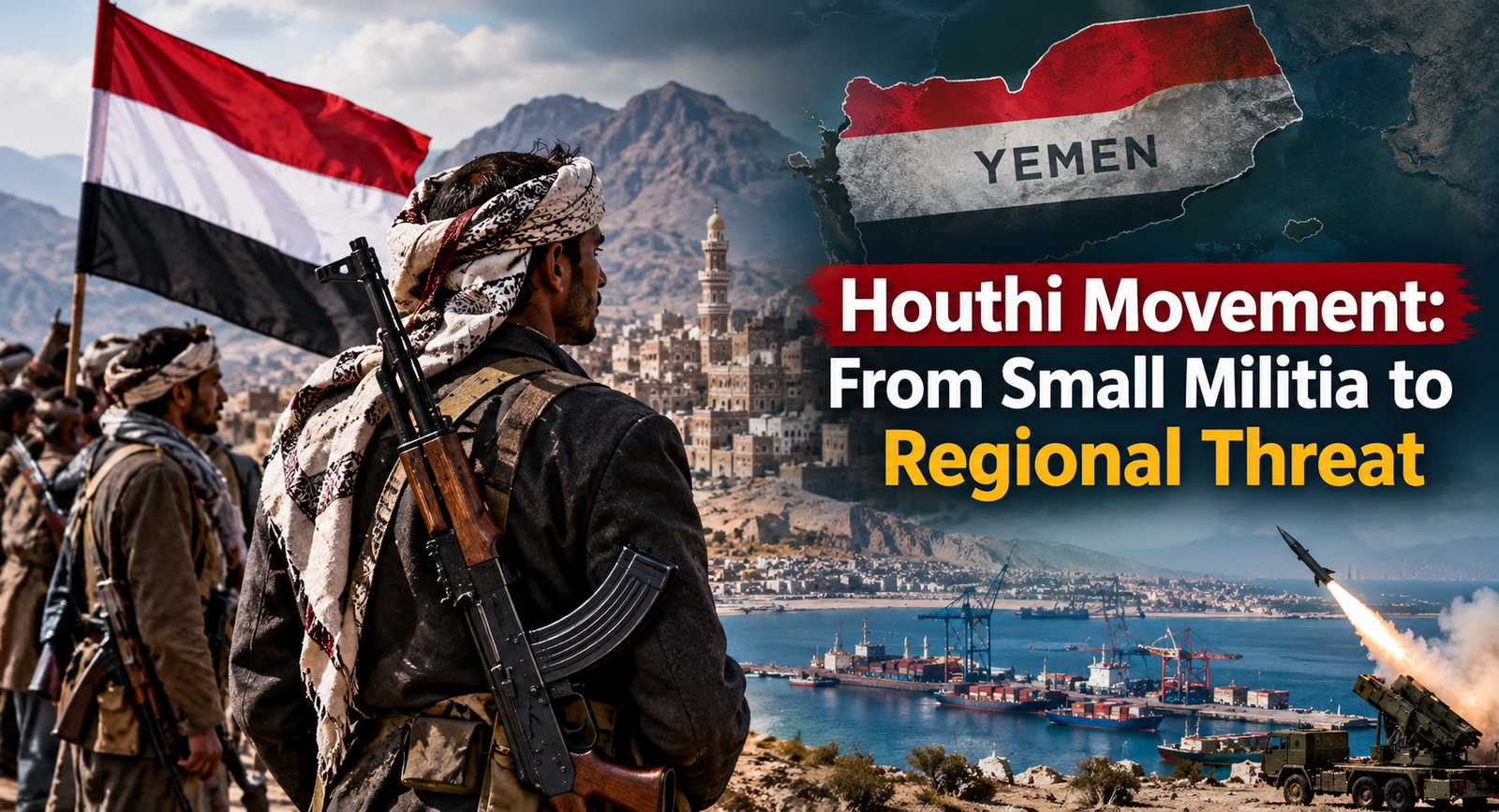
The Houthis emerged from Yemen’s Saada Governorate and have today established influence over important areas, ports, and military positions in Yemen. The movement has also received significant support from Iran. The foundation of the Houthi movement, its official name, its conflict with the Yemeni government, the death of Hussein al-Houthi, and its rise in military power are explained below.
Table of Contents
When and Where Was the Houthi Movement Founded?
The roots of the Houthi movement can be traced to the early 1990s in Yemen’s Saada Governorate, where the Believing Youth, known in Arabic as Shabab al-Mu’min, emerged as a Zaydi religious and educational movement. Sources differ on the exact role of its founders, but Mohammed Azzan is widely identified as one of its founders. Saada is a historic center of Zaydi Islam.
In its early years, the movement focused on religious, political, and cultural education. It was not initially an armed militia. The movement later became increasingly political under the influence of Hussein Badr al-Din al-Houthi and eventually developed an armed wing.
How Did the Houthi Movement Initially Operate?
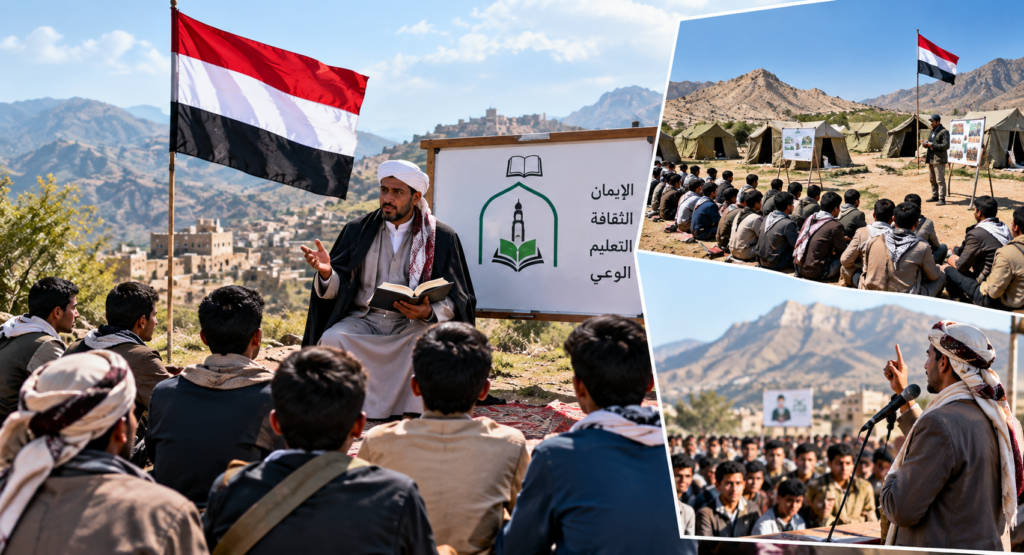
In the beginning, the movement focused on educating Zaydi youth in Saada about religious, social, and political issues. Religious study groups and summer camps were organized for young people.
After the 2003 US invasion of Iraq, Hussein al-Houthi became increasingly critical of the Yemeni government and its relationship with the United States. His speeches and protests increased tensions with the government. The confrontation eventually developed into armed conflict in 2004.
The Official Name of the Houthi Movement: Ansar Allah
The movement initially operated through the Believing Youth organization. It later became widely known as the Houthi movement because of the prominent role of the al-Houthi family, particularly Hussein al-Houthi.
The movement officially refers to itself as Ansar Allah, meaning “Supporters of God” or “Partisans of God.” The name Houthi remains the common international and media term for the movement.
What Is the Purpose of the Houthi Movement?
The Houthi movement initially aimed to strengthen Zaydi religious identity and increase its social and political influence in northern Yemen. Over time, its stated objectives expanded to opposition to the Yemeni government, resistance to foreign intervention, and greater political influence in Yemen.
Conflict Between the Houthis and the Yemeni Government
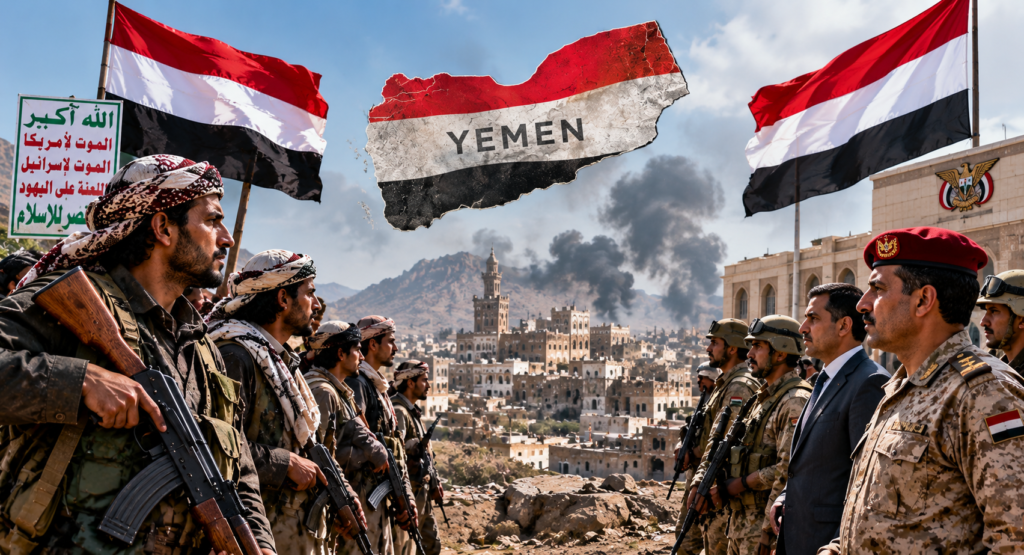
Tensions between the Houthi movement and the Yemeni government grew during the 1990s and intensified in the early 2000s. The movement and its supporters complained about the marginalization of Zaydi communities and political and economic conditions in Saada.
The early Believing Youth movement initially received some government tolerance and support. However, relations deteriorated as the movement became more political and tensions grew between Hussein al-Houthi and President Ali Abdullah Saleh’s government.
The Death of Hussein al-Houthi and the Strengthening of the Movement
Hussein Badr al-Din al-Houthi was a former member of Yemen’s parliament and became an outspoken critic of President Ali Abdullah Saleh’s government.
In June 2004, the government arrested hundreds of his supporters in Sana’a. Fighting then broke out between Houthi forces and government troops in Saada. Hussein al-Houthi was killed by government forces in September 2004.
After his death, leadership of the movement passed to his brother, Abdul-Malik al-Houthi. The conflict continued through a series of wars between the Houthis and the Yemeni government from 2004 to 2010.
The Houthis Capture Sana’a and Other Areas
After the 2004 conflict, the Houthis gradually expanded their influence in northern Yemen. The six Saada wars between 2004 and 2010 gave the movement significant military experience and helped strengthen its organization.
Following Yemen’s political crisis in 2011, the Houthis expanded into additional areas. In 2014, they entered Sana’a and took control of key government institutions. They later expanded their control to other areas, including Amran and the important Red Sea port of Hodeidah. In 2015, they also advanced toward Aden, prompting a Saudi-led military intervention.
A Painful Record of Alleged Houthi Abuses
The Houthis have been accused of serious human rights violations, including arbitrary detention, torture, attacks affecting civilians, recruitment of children, and the use of landmines.
Human rights investigations have also documented allegations of abuses against political opponents, journalists, and civilians. Some cases in Houthi-controlled areas have involved severe punishments, including death sentences. These allegations should be understood in the wider context of Yemen’s war, where multiple parties to the conflict have also been accused of serious violations.
Why Does Iran Support the Houthis?
Iran’s support for the Houthis is widely linked to its broader regional strategic interests. Through its relationship with the Houthis, Iran can increase pressure on Saudi Arabia, challenge US and Israeli influence, and strengthen its regional position around important waterways such as the Red Sea and the Bab al-Mandab Strait.
United Nations investigations have reported evidence of Iranian-origin components, technical assistance, training, and other forms of external support reaching the Houthis. However, the Houthi movement has its own Yemeni political and military interests and should not simply be described as a group entirely controlled by Iran.
How Did the Houthis Develop Their Military Power?
Houthi military capabilities developed over many years. Their experience in repeated wars with the Yemeni government, access to weapons, local assembly, and reported foreign technical and military support all contributed to their growing capabilities.
The Houthis now possess missiles, drones, rockets, and other weapons systems. UN investigations have reported similarities between some Houthi weapons and Iranian systems, as well as evidence of external technical assistance and the transfer of components.
The Houthi-Saudi Arabia Conflict
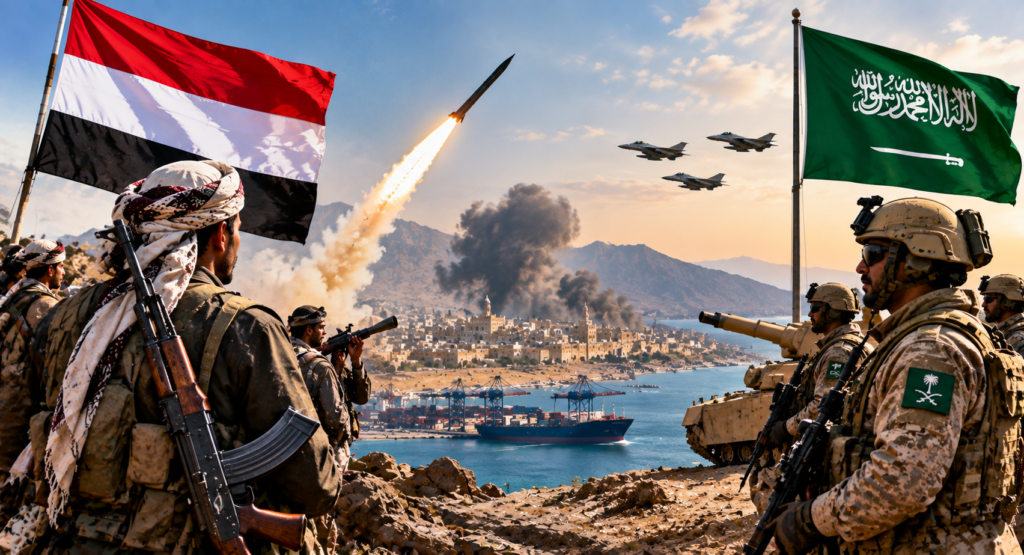
The conflict between the Houthis and Saudi Arabia is closely linked to Yemen’s civil war and the different political and security interests of the two sides.
In 2015, a Saudi-led coalition launched military operations against the Houthis in Yemen. The Houthis subsequently carried out missile and drone attacks against Saudi territory. The Houthis described the Saudi intervention as aggression against Yemen, while Saudi Arabia viewed the Houthi movement as a security threat along its southern border.
Houthis vs. Al-Qaeda in the Arabian Peninsula
The Houthis and Al-Qaeda in the Arabian Peninsula, or AQAP, have historically been opposing armed groups with different religious and political ideologies.
As the Houthis expanded their influence in northern Yemen, AQAP sought to strengthen its position in central and southern areas. The two groups fought each other during different stages of Yemen’s conflict. Their rivalry has been an important part of Yemen’s wider security crisis.
Conclusion
The Houthis’ journey began as a religious and social movement and gradually developed into a powerful armed organization. Years of conflict, territorial expansion, regional tensions, military experience, and external support helped increase their capabilities. Their control of parts of Yemen and their ability to launch missile and drone attacks have given the movement a significant role in Yemen and wider regional affairs.
FAQs
What is the Houthi Movement?
The Houthi Movement is a Yemeni political and armed movement, also known as Ansar Allah, with roots in northern Yemen.
When did the Houthi Movement become armed?
The Houthi Movement became involved in armed conflict with the Yemeni government in 2004.
Who leads the Houthi Movement?
Abdul-Malik al-Houthi has led the movement since the death of his brother Hussein al-Houthi in 2004.
Why does Iran support the Houthis?
Iran has provided various forms of reported military and technical support to the Houthis as part of its wider regional strategy.
Why are the Houthis important in Yemen?
The Houthis control significant areas of northern Yemen and have developed military capabilities involving missiles and drones.

I am the founder and writer at Duniya Time.com, a news website focused on national and international news, social issues, and history. With a background in Islamic History, I write research-based articles in a clear and honest style. My goal is to share accurate information, thoughtful analysis, and meaningful stories that help readers stay informed and understand the world better.